Posts

Showing posts with the label australasian antarctic expedition

Anthropocene began in 1965, according to signs left in the world's 'loneliest tree'

Image
Anthropocene began in 1965, according to signs left in the world's 'loneliest tree' Pavla Fenwick , Author provided Chris Turney , UNSW ; Jonathan Palmer , UNSW , and Mark Maslin , UCL On Campbell Island in the Southern Ocean, some 400 miles south of New Zealand, is a single Sitka spruce. More than 170 miles from any other tree, it is often credited as the “world’s loneliest tree”. Planted in the early 20th century by Lord Ranfurly, governor of New Zealand, the tree’s wood has recorded the radiocarbon produced by above ground atomic bomb tests – and its annual layers show a peak in 1965, just after the tests were banned. The tree therefore gives us a potential marker for the start of the Anthropocene. But why 1965? The 1960s is a decade forever associated with the hippie movement and the birth of the modern environmentalism, a sun-blushed age in which the Apollo moon landings gave us the iconic image of a fragile planet fra...

Death of a colony

Image
Cape Denison holds a special place in the history of Antarctic exploration. A small outcrop of rocks on the remote East Antarctic coastline, Cape Denison is forever associated with one of the most spectacular and often forgotten tales of survival. A century ago it was the main base of operations for one of the great explorers of the south: the Australian scientist Sir Douglas Mawson . Privately funded, three bases and one research ship supported a science team that explored a region the size of the United States between 1911 and 1914. Mawson’s Australasian Antarctic Expedition, however, suffered terribly during their time at Cape Denison: a sudden turn of events led to tragedy on the ice, the death of two men, allegations of cannibalism and with the return of winter sea ice, an extended stay in Antarctica. But when they first came upon Cape Denison, Mawson was ecstatic. Greeted by squawking penguins: ‘ We were soon inside a beautiful, miniature harbour completely land-locked. The su...

Final preparations

Image
I am sitting in Dubai, waiting to catch my flight back home. Looking out of the airport window, the sandy landscape blurs with the skyline, dissipated by the high temperatures outside. It’s the antithesis of where I’ll be in one week’s time. Instead of blistering heat, the Australasian Antarctic Expedition 2013-2014 will be departing from the Invercargill port of Bluff in southern New Zealand for the start of a six week voyage which we hope will culminate in reaching a frozen time capsule: Sir Douglas Mawson’s original expedition base at Commonwealth Bay, Antarctica . Two years of planning are finally coming to fruition. Two years of planning for a major science expedition; two years of putting together the best possible team and all the interviews, training, meetings, form filling, and equipment purchases and hire that go with it. Choices we made months ago are now committed. Only time will tell if we made the correct ones. To be honest, the last few months have been a bit of a...

Antarctic Scribbles: The winners of the Oz and NZ Doodle 4 Google competition have just been announced

Image
A year ago we started a conversation with Google and the Commonwealth Bank of Australia about the possibility of offering two berths on the Australasian Antarctic Expedition 2013-2014 as a prize for Google 4 Doodle. For those not familiar with this competition, Doodle 4 Google is a school contest offered across different countries every two years or so. The challenge for children is to redraw the Google logo inspired by a question or statement. Prizes vary around the world; the top doodles in Australia and New Zealand usually win some fantastic technology for the classroom. This year, Google and the Commonwealth Bank of Australia wanted to do something a bit different: they wanted to bring Antarctica to the school children of Australia and New Zealand as never done before. Besides the technology, the prize would include a berth for the teachers of the winning schools on the expedition and our discoveries would be beamed home using Google+, Hangouts on Air and YouTube. It was dizzy...

Win a trip to the New Zealand sub-Antarctic islands!

Image
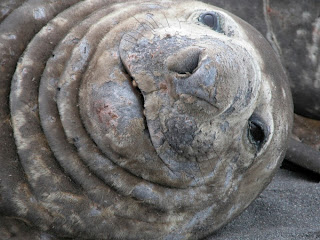
Bringing the Antarctic a little closer to home is a major reason for the Australasian Antarctic Expedition 2013-2014 . You can get involved in all manner of ways. For those keen to have a hand in the science programme and join us in the south, berths are for sale . Working with Commonwealth Bank as sponsors of this year’s Doodle 4 Google expedition prize, we are also taking a winning teacher from both Australia and New Zealand as part of the team. And for those who prefer warmer climes but still want to explore this special part of the world, you can take part in the free Google+ Hangouts on Air , where we will be streaming live footage of the journey and answering questions about our findings.  An elephant seal in the sub-Antarctic But now we have even more fabulous news. One lucky CommBank customer and a friend have the chance to win a place on the first leg of the Australasian Antarctic Expedition 2013-2014 , and follow in the footsteps of the great scientist and exp...

History of Antarctic Exploration in 30 Objects: The Countdown Begins!

Image
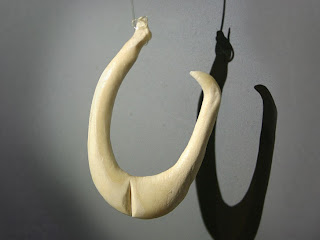
As a general rule, I loathe counting down to a big occasion. Following the passing hands of a clock is not something you would naturally associate with keeping people calm. So when Monday arrived it was with some little trepidation. 30 days before the departure of the expedition would the anxiety levels perceptibly rise? Might the general buzz become subdued? Or would someone freak out and start to panic? I needn’t have concerned myself. There was barely a ripple. No one seemed perturbed by the countdown one little bit. Instead, everyone was strangely exhilarated by the start of the week. True, there was the normal chaos planning and ordering last minute items but the realisation we’re now on the home straight had an energising effect. A Polynesian fishhook dating back to the 14th century from the subantarctic Auckland Islands. See the real thing at the  Southland Museum & Art Gallery, Invercargill, New Zealand . To mark the fast approaching departure of the Austra...

Packing Up

Image
Against a backdrop of smoke-filled air and concern for family and friends in the Sydney bush, we spent last week packing our shipping container with scientific gear for Antarctica. The last month has been a scramble, with Chris and I ordering and receiving ever more equipment, talking to the media, negotiating with various officials – or trying to – and drawing up lists of supplies still to be bought. It’s incredible how quickly time has gone. We leave in just five weeks!  In that time we have to get the equipment to the Invercargill port of Bluff, clear customs and be ready to load our vessel, the MV Shokalskiy, when we take ownership at one minute past midnight on the 27 November. Somehow we appear to be on schedule. The arrival of our shipping container Not a lot has changed over the last century. Preparation for expeditions has and always will be a manic affair. When getting ready for the original Australasian Antarctic Expedition, Mawson’s diary for November 1911 i...

Doodle 4 Google: Rediscovering Scientific Exploration

Image
A century ago Mawson and his fellow explorers travelled the world, exciting the public with tales of endeavour and discovery in Antarctica.  Newspaper reports, books, lecture tours, interviews, records, radio and films were all used to capture people’s imagination. The efforts of these early Antarctic explorers to publicise their findings were remarkably effective. The blend of research and exploration was a high point in science communication. The reports of derring-do, extreme conditions, curious wildlife and heroism in the south combined to make scientific exploration headline news one hundred years ago. It was an amazing time, experienced by remarkable people.  The accounts from yesteryear still resonate today; capturing the imagination few – if any – other periods in the history of exploration are capable. And yet with the media available today we have an opportunity to strike up a conversation with a far greater number of people. Thanks to Google, we are trying jus...

Putting the Team Together: A Call for Help

Image
When planning an expedition, it’s essential you put together the strongest possible team, capable of achieving your goals. The challenge is to pick individuals who will get on under almost any circumstance; not something altogether easy from the comfort of a warm and sunny Sydney. Skill sets are one thing but an ability to get on with one another and muck in when the time comes is a very close second priority. The Antarctic explorers Douglas Mawson and Ernest Shackleton were great leaders in this respect. They could recognize the potential in individuals from twenty paces. Shackleton once famously spotted a future expedition member travelling by on the upper deck of a London bus; the great Anglo-Irish explorer rushed outside and secured his participation with much success. Mawson followed Shackleton’s lead in this respect and built his Antarctic ventures around individuals he liked and admired. The key thing was these great explorers and their contemporaries used every avenue possib...

The Start of the Antarctic Science Season

Image
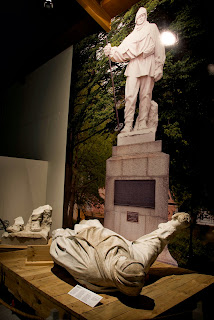
On 11 February 1913 England woke to the Daily Mail headline ‘Death of Captain Scott. Lost with four comrades. The Pole reached. Disaster on the return.’ Just a day before, the press had reported that the British Antarctic expedition leader was back in New Zealand after succeeding in his goal to reach the South Geographic Pole; the Royal Geographical Society had even prepared a telegram congratulating him on his success. The palpable sense of anticipation and excitement now turned to despondence. A few days later a hastily organised memorial service was held in St Paul’s Cathedral, London. The numbers attending were staggering, exceeding those at the service for the 1500 lives lost on the Titanic in the same year. ‘The presence of the king,’ The Times declared, ‘conveyed a symbolism without which any ceremony expressive of national sentiment would have been inadequate.’ The Empire grieved and in response, clock towers were raised, streets renamed and monuments erected. Statues c...

The Science Program of the Australasian Antarctic Expedition 2013-2014

Image
The original Australasian Antarctic Expedition produced the first comprehensive study of the vast region south of Australia and New Zealand. The three years’ worth of observations gleaned by Mawson and his men provide a precious dataset we can compare against today. Yet, in spite of a century of research, major research questions remain. Weighty policy documents highlighting the key science questions in the region are regularly prepared by national governments and institutions. But the combination of extreme conditions and vast distances involved make the Australasian sector of the Antarctic one of the most problematic to study. With the dramatic environmental and climatic changes seen across the region, the need is an urgent one.  Last week we had two brilliant days planning the science programme with the Australian and New Zealand teams at the University of New South Wales and Landcare Research . It was pretty intense. Although Chris and I knew everyone, some were complete...

Fantastic response to call for Antarctic expeditioners

Image
The Antarctic expeditions of old would routinely advertise for applicants to join them in the south. Exciting – and often wonderfully sensational – proclamations would be placed in the broadsheets, appealing to national sense of duty to scientifically explore the newly discovered continent in the Southern Ocean. Posting calls in the press helped team leaders fill key positions in their party while also maintaining a high public profile, crucial for raising much needed funds. Mawson was no exception in this regard. Adverts for the original Australasian Antarctic Expedition included open meetings in state capitals and an appeal by Shackleton in the British newspapers. The public responded enthusiastically to the scale of the expedition: four bases spread out along a near-unknown Antarctic coastline. Here was a venture everyone could get involved in, either directly as a team member or by sponsoring essential supplies and equipment. Inspired by Mawson: Using the latest technology to ...

PhD volunteers sought for Antarctic science and adventure

Image
In 1913, the Anglo-Irish explorer Sir Ernest Shackleton allegedly ran the following advert in The Times newspaper: Shackleton's famous advert Men wanted for hazardous journey, small wages, bitter cold, long months of complete darkness, constant danger, safe return doubtful, honor and recognition in case of success. Although it seems unlikely this call was actually ever made, it is very much in the spirit of the great Antarctic explorer. Inspired by the likes of Shackleton and Mawson, the Australasian Antarctic Expedition 2013-2014 is making a similar call for volunteers. In this more enlightened age though, we’re looking for volunteers of either gender to join us on our journey south. To be eligible you must be a registered student working towards a PhD and be able to place your studies on hold for a minimum of 3 weeks between the 23 November 2013 and the 6 January 2014.  Sir Ernest Shackleton (1908; courtesy of the State Library of Victoria)  Sadly t...

Finding a path

Image
Mawson’s expedition was a complete scientific exploration of what many suspected to be an entirely new continent, lying in the ‘Australian quadrant’. While exploring on the ice, the expedition vessel, the Aurora , would traverse the Southern Ocean collecting ocean and biological samples alongside depth soundings. Mawson was in no doubt about the importance of his mission: ‘The early glimpses of the Antarctic continent, and its history, illustrate how little is yet revealed of the wealth of scientific data locked up within its icy ramparts, and calls for the united efforts of scientific bodies throughout the world to banish this ignorance, which stands as a reproach in this enlightened twentieth century.’ The expedition vessel, the MV Shokalskiy The continent might be better placed on the world’s maps today but many of the same issues remain. Just as Mawson recognised 100 years ago, the Antarctic region south of Australia is of global significance and a number of vital scienti...

Taking flight

Image
To maintain public interest in the original Australasian expedition south — and keep funds flowing — Douglas Mawson looked to Scott of the Antarctic’s motorised sledges for supporting work on the ice. After reviewing the designs of the vehicles in 1911 he regretfully concluded they would not do. Instead, Mawson thought flight might be a better money-spinner. It was a shrewd move. Only ten years before, the Wright Brothers had famously made the first powered flight; the technology had advanced swiftly since then, and with it public excitement about the possibilities of air travel. Sadly it was not to be. During a test flight on the morning of a public display over Adelaide racecourse — with the South Australian Governor scheduled to be first in the air — the Vickers plane crashed, apparently not helped by the pilot having ‘been very late at the Naval and Military Club the night before’. Disgraced, the airman was sent home, the wings stripped off the plane, and the engine and body wer...

The first of the expedition gear arrives!

Image
A major aspect of our expedition is making comparisons to Mawson’s venture a century ago. This isn’t just about looking at the scientific data collected a hundred years ago; we also want to explore how the clothing and equipment used by the intrepid scientists of yesterday stacks up against modern gear. Side by side, does today’s kit really stand out as state-of-the-art? Having teams take observations with antique tools and in Edwardian garb will make a fascinating comparison. As a result, one of the first orders we made was for reproductions of the gear used by the original expedition.  Mat and I trying on the Edwardian clothing: eat your heart out Paris! Fittingly, it was the replica equipment that was the first of the AAE orders to turn up at the  University of New South Wales  this week. On a blustery Sydney afternoon, a three-metre long wooden crate arrived from UK polar equipment company,  Snowsled . We couldn’t wait to see the first of our purcha...