Posts

Showing posts with the label radiocarbon dating

Understanding what happened when at the end of the last ice age
Image
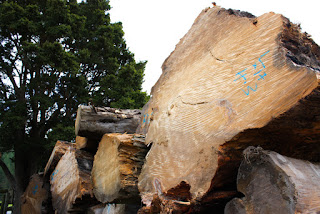
We're very excited. We have a new research paper out using swamp kauri called 'Decadally resolved Lateglacial radiocarbon evidence from New Zealand kauri'. Using ancient trees buried in bogs in Northland, we've been able to stitch together a decade-by-decade record of atmospheric radioactive carbon levels during the end of the last ice age. The result is we have tied together tree-ring records from Europe and New Zealand to significantly improve the radiocarbon timescale, allowing archaeologists and Earth scientists to better understand what happened when over the past 14,200 years. It's taken more than ten years of research but it feels like we've made a big step forward! Swamp kauri over 10,000 years old If you'd like to learn more, the research paper is published in the Cambridge University Press journal Radiocarbon at  https://www.cambridge.org/core/journals/radiocarbon/article/decadally-resolved-lateglacial-radiocarbon-evidence-from-new-zealan...
Image
DNA evidence proves climate change killed off prehistoric megafauna Chris Turney , UNSW Australia and Alan Cooper Imagine a world populated by woolly mammoths, giant sloths and car-sized armadillos – 50,000 years ago more than 150 types of these mysterious large-bodied mammals roamed our planet. But by 10,000 years ago, two-thirds of them had disappeared. Since the end of the 19th century, scientists have puzzled over where these “megafauna” went. In 1796, the famous French palaeontologist Georges Cuvier suggested a global catastrophe had wiped them out. Others were appalled. The great Thomas Jefferson was so against Cuvier’s idea he sent an expedition to try to find vast herds of these animals grazing contentedly in the American interior. The only thing anyone could say with certainty was there should be a lot more of them than we see today. Alfred Wallace, who wrote the first paper on evolution by natural selection with Charles Darwin, noted that “we live in a zoologically ...