Posts

Showing posts with the label extreme climate change

Giving future Australian drought a 500-year perspective
Image
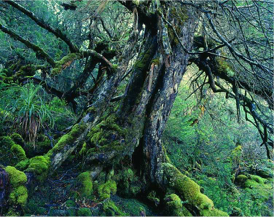
Here at Intrepid Science we focus a lot of effort on trying to better reconstruct past climate and environmental change. The main reason is that by understanding what happened when in the recent geologic record we can reduce the uncertainties surrounding future climate change and its impact(s). But don’t be misled by the term ‘geologic record’. Basically we’re looking beyond the historic record of scientific observations by reading what’s preserved in the landscape – what are sometimes described as ‘natural archives’. Nature has a fabulously diverse library and can include trees, corals and even ice cores. The real test is finding these ‘books’. As a result, the team work around the world unearthing new records. One of our most recent projects is to reconstruct changing drought across eastern Australia and New Zealand over the last 500 years. When Australia experiences a drought, it can cause billions of dollars of environmental and economic damage. A classic example is the ‘Millenniu...

Rapid Warming and Humans Drove the Ice Age Extinction of Patagonia's Megafauna

Image
At the end of the last ice age (11,000 to 18,000 years ago), the world suddenly lost some of the most remarkable creatures that ever roamed our planet. Patagonia in southern South America was particularly rich in creatures that could only be labelled bizarre today: elephant-sized sloths, giant jaguar, powerful sabre-toothed cats and an enormous one-tonne short-faced bear (the largest ever land-based mammalian carnivore). What caused their demise is  one of the big geological whodunnits.  Last year you may remember we had a research paper published in Science that looked at megafaunal extinction in North America and Eurasia . Whilst warming looked like it was a driver of the extinctions in the Northern Hemisphere, there was a tantalising hint that humans had also played a role. But disentangling the effects of both was challenging.  To test their roles we have extended our work to Patagonia and the results are now published in the The American Association for the Advan...