Posts

Showing posts with the label subantarctic

Going with the floe

Image
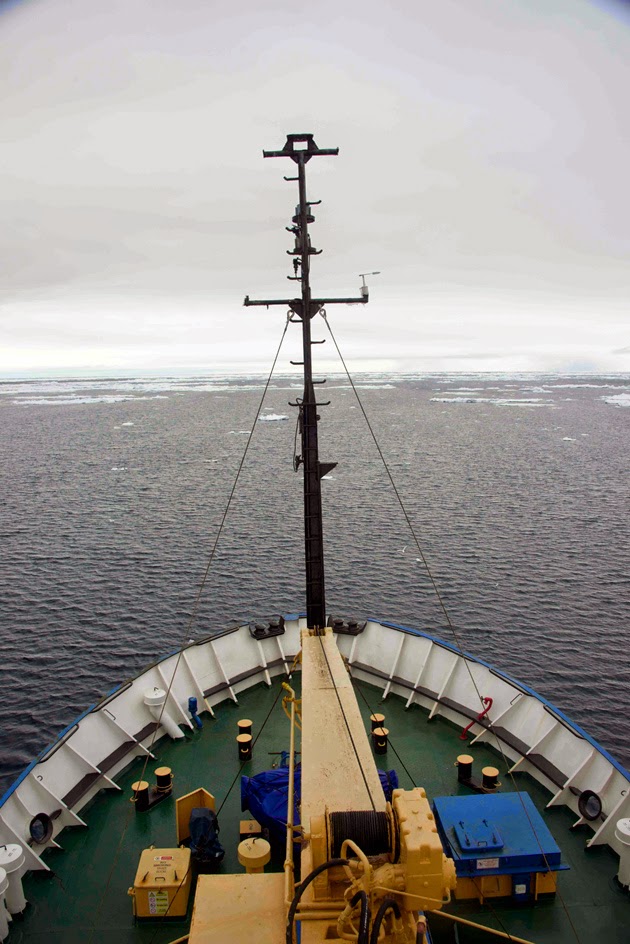
Punching your way through sea ice is a bit like being in a bombardment. One moment all is calm, the next silence is shattered by a crushing, grinding sound which reverberates throughout the ship. The duration of this assault on the senses can be fleeting or sustained, depending on the ice being negotiated by the vessel. The Shokalskiy is fortunately an ice-strengthened vessel but that doesn’t mean it is invincible. The ship’s captain Igor and his team have to carefully select which ice floes they negotiate while keeping an eye on what lies beyond. The rule of thumb is that only some 10-20% of ice can be seen floating above the surface. So 40 cm of visible ice means at least 160 cm is submerged. An important statistic when you’re taking an unsupported vessel deep into the pack ice, hundreds of kilometres from the nearest living soul. Approaching sea ice Today had everything with dizzying highs and lows. We woke to fog but this cleared early morning to leave us with a brilliant ...

First ice

Image
Today I experienced an entirely sensation: travelling through sea ice. I don’t think anything can really prepare you for the magnificence of the experience. After days of rolling on the high seas, we have entered a world of absolute silence and calm. The chaotic high seas have been replaced by tranquil, millpond conditions. Flat, low lying chunks of ice lie scattered across the surface, separated by narrow leads of water, which the Shokalskiy resolutely tries to follow as it works its way across this ice scape. All is white and blue. The few waves we see are shadows of their cousins further north, and these pass lazily by, leaving little impression on the surface. One of the expeditioners who wrote a wonderful entry about the AAE’s first arrival in sea ice was meteorologist Cecil Madigan. On the 30 December 1911 the fog had cleared and Madigan wrote: “From the open cabin door I look out on about one hundred yards of open sea, part of an open lead we are following just now throu...

We're officially in the Antarctic!

Image
I’m not a lover of routine but I will say this: it breaks up the day incredibly well. Three square meals a day, interspersed with science observations, equipment checks, planning meetings and lectures means days on the ocean disappear as if they had never existed. If you’re looking for time to kill, take a cruise on the high seas; I can’t recommend it enough. It’s been two days since we left Macquarie Island but it only seems like yesterday. We are crossing one of the wildest seas in the world. We have lost team members to their bunks, grappled with electronic gear in the wettest of conditions and spent hours on deck working amongst frighteningly high waves. But no matter how miserable the conditions we’re operating in, time stubbornly flies by. One big advantage of all this ship time – no matter how illusionary – is you do get to know your team, something just not possible when taking a flight. The expeditions of the Heroic Era had weeks at sea, testing individuals, allowing them ...

Bobbing like a cork

Image
Discovered in 1810, Macquarie Island suffered its first shipwreck three years later and hasn’t really let up. It is not hard to imagine why. The  Caroline ,  Nelson ,  Eagle  and  Endeavour  are just a handful of craft that have ended their days here. The only way in is by sea but steep cliffs, shallow waters, wild winds and frequently heavy surf combine to make the shore a hazard to visitors.  Even getting close is fraught with danger as Mawson’s team learnt on their arrival. On their approach to Macquarie Island, the AAE saw a beached sealing vessel, the  Clyde,  which had been wrecked on a reef after a particularly bad storm. Under guidance from the sealers, the  Aurora  edged itself into more protected waters before delivering the team and equipment that were to call this remote spot home for two years. Morning panoramic view over Macquarie Island Sitting at 54˚S and 34 kilometres long, the 5 kilometre wide Macquarie Isl...

Beating a path to Macquarie

Image
On the 2 December 1911, the residents of the island state of Tasmania turned out in droves to farewell the heavily laden  Aurora  when it headed south from Hobart. Sir Douglas Mawson’s Australasian Antarctic Expedition was off. It had been an extraordinary year. Mawson had somehow managed to raise the necessary funds; appoint a team of scientists, engineers and ship’s crew; buy and provision a vessel; and obtain enough equipment and supplies to sustain a scientific expedition in the field for fourteen months. But it was not all plain sailing. A week after departure, Mawson wrote to his fiancé Paquita: ‘Our journey has been lengthened by a gale and encumbered decks – we scarcely thought to get through Tuesday last, but providence has asserted itself right from the beginning.  The Starboard bulwarks, motorboat and part of the bridge have been broken up – repairs are however well underway…The Aurora rolls day and night without ceasing – I have been trying to sleep on a c...

We're off to Antarctica

Image
I’m used to turning things round quickly but reprovisioning a ship and rotating an expedition in one day is not something I would recommend. There really is only one word for it: madness. We arrived in Bluff on the morning of the 7th December. The Sun was breaking through the clouds and southern New Zealand seemed very peaceful as we slowly approached the shore. But the immediate impression I had was of the overwhelming scent coming from the coast. I hadn’t noticed Bluff as being one of the great perfumed capitals of the world but it was certainly vying for a place in the top ten as our vessel, the  Shokalskiy,  approached land. I sat on the top deck, soaking up the sunshine and the closed my eyes, breathing in the fragrance. It was a brief indulgence. There was so much to do and everyone worked so hard to make it happen. The challenge was trying to anticipate what was needed over the next 24 hours. At the back of our minds was the big elephant in the room: what might we...

Land of the Albatrosses

Image
A sadly neglected member of the original Australasian Antarctic Expedition team was Captain John K Davis, aka ‘Gloomy Davis’. While Mawson and his teams were operating out from the land and ice bases on Macquarie Island and the Antarctic continent, second-in-command Davis effectively led the fourth base: the expedition vessel, the  Aurora . This role was so much more than just provisioning everyone else. Davis was charged with leading a full science program across the Southern Ocean: the so-called ‘subantarctic cruises’. Not a scientist himself, Davis somehow managed to maintain a full program of research, whilst also keeping order amongst a group of independent-thinking academics – described by someone on our current expedition like ‘herding cats’! – and navigating some of the most treacherous seas in the world. There is no doubt this work often frustrated Davis. On one of the cruises, Davis took a Tasmanian biology professor who was no less than Errol Flynn’s father. Flynn and ...

A baptism of wind

Image
The promise of fine weather ended with my last post! I knew I was tempting fate as soon I put fingers to keyboard and waxed lyrically about the excellent conditions. Since then the Southern Ocean has come back with a vengeance, swinging from one extreme to the other. Wind, rain, hail and sleet have been our regular companions, and then just to play with our minds, the clouds suddenly clear and the Sun bursts forth – albeit briefly. Tonight as I sit in my cabin writing this blog I can hear the wind blowing a gale outside and the second anchor has just been dropped to steady the vessel; a first apparently. It’s hard to second guess what will happen with the weather. I watch the barometer for signs of change but the simplest relationship seems to be high pressure equals wind but it’s only a rule of thumb. The weather almost seems to do what it wants; as if it’s made a conscious decision to give no clues as to its intentions. Late last night the barometer was rising with heavy rain and w...

We're off!

Image
Well, we made it. After two years of dreaming and a lot of hard work, the Australasian Antarctic Expedition 2013-2014 has finally set sail! Departing from Bluff in southern New Zealand yesterday, our ship the MV Akademik Shokalskiy headed off, packed to the gunnels with all manner of scientific gear and 41 team members, all squirrelled away on board. Chris Fogwill and I had a mad final 24 hours in the lead up to this special moment. Team members were delayed by flights, key forms granting permission for our research programme were finalised on the afternoon of sailing and one major piece of kit turned up 30 minutes before we departed – amazingly the latter had been sent to the wrong address and was about to board a flight out of the country! We ran round like headless chickens in the end, chasing the last things we needed and packing them away – all of which had to be stowed in anticipation for the wild Southern Ocean winds and waves. There were some highlights though: the Mayor of ...

Win a trip to the New Zealand sub-Antarctic islands!

Image
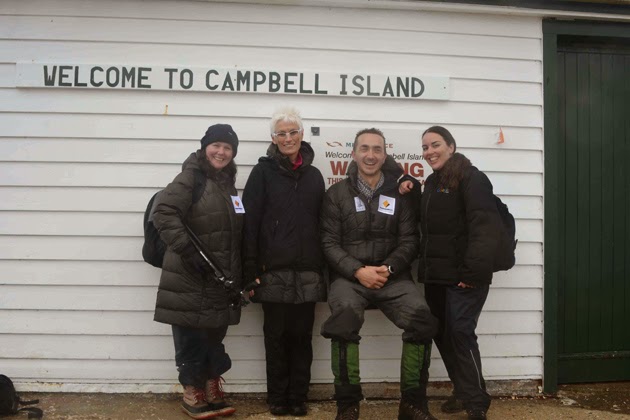
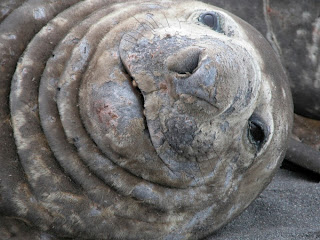
Bringing the Antarctic a little closer to home is a major reason for the Australasian Antarctic Expedition 2013-2014 . You can get involved in all manner of ways. For those keen to have a hand in the science programme and join us in the south, berths are for sale . Working with Commonwealth Bank as sponsors of this year’s Doodle 4 Google expedition prize, we are also taking a winning teacher from both Australia and New Zealand as part of the team. And for those who prefer warmer climes but still want to explore this special part of the world, you can take part in the free Google+ Hangouts on Air , where we will be streaming live footage of the journey and answering questions about our findings.  An elephant seal in the sub-Antarctic But now we have even more fabulous news. One lucky CommBank customer and a friend have the chance to win a place on the first leg of the Australasian Antarctic Expedition 2013-2014 , and follow in the footsteps of the great scientist and exp...