Posts

The last great global warming

Image
As world leaders gather in the Danish capital Copenhagen to negotiate a successor to the Kyoto Agreement , it’s probably worth pondering on what happened last time temperatures were at levels predicted for the end of this century.   In 1874, a scientist called Pieter Harting took a number of cores that had been taken around the Dutch city of Amersfoort. The sediments they contained provided a treasure trove of information on an ancient climate.  Not only did the ocean muds Harting find show this part of the Netherlands was once under the sea but the seashells contained therein belonged to species that did not live in the 19th century North Sea. Crucially, some of his fossil species were identical to those living in the Mediterranean, suggesting that the North Sea had been warmer than today. He named the layers ‘Système Eémien’ after the River Eem that flowed alongside Amersfoort. We now know these layers date back to between 130,000 and 116,000 years ago. Although this s...

Playing the futures game

Image
During moments of idleness I’ve often dreamt of seeing into the future. I have been known to ponder frivolously who’ll win a World Cup Final or the US Masters but other times it’s a lot more prosaic; what will happen with a new initiative at work? How should I respond to comments on a research paper? Shall we go for coffee? And so on. We all draw on as much knowledge as we can to answer these sort of questions, but there’s often moments when we need to make a decision quickly; where time is of the essence but we don’t have all the information we’d like. Fortunately, if we make the wrong choice and things don’t go to plan, it’s often possible to quickly change tack and redress the situation. Yet what happens when you have a global environmental issue which urgently needs a deal that can’t afford to be wrong? Next month, the United Nations faces just such a challenge. Negotiations are taking place in Copenhagen to thrash out a new climate deal to replace Kyoto with nations offering a ...

A warning from the north

Image
I’ve just returned from fieldwork in Svalbard, the island archipelago situated halfway between Norway and the North Pole. Straddling 81˚ to 74˚N, this near-pristine environment is a haven for researchers interested in Arctic environments.  I’ve been extremely privileged to visit some beautiful places in the world but was blown away by Svalbard. The islands are a heady mix of mountains, ice and 24-hour summer daylight that was totally different to anything I had ever experienced before. I was there as part of a University of Exeter research team to look into the impacts of past climate change, funded by the Leverhulme Trust .  For two weeks, we boated, trekked, dug and probed our way into Svalbard’s recent geological past. As the ice has retreated back from its maximum limits at the end of the last ice age, the land has risen out of the sea, exposing ancient landforms and sediments that preserve a fabulous record of what has happened in this part of the world over the past 20...

A changing climate in Copenhagen

Image
I’ve just returned from a major climate meeting in Copenhagen with a mixture of emotions.  Attended by more then 2000 scientists, the aim was to pull together the very latest in climate change science since the Intergovernmental Panel on Climate Change (better known as the IPCC) made their 2007 Fourth Report on the past, present and future world’s climate. Although the IPCC Fourth Report was an impressive summary of the worrying state of climate, its conclusions were based on science that was published before 2005. Since then a staggering amount of new work has been generated. Given the pace of research and the speed at which change is happening on the ground, this was a fantastic meeting to catch up on the latest thinking. Regardless of whether you attended, you can watch many of the key lectures by going to the conference website .  They’re a great resource for anyone interested in climate change.  Copenhagen negotiations In the IPCC report, a number of diffe...

Fixing carbon

Image
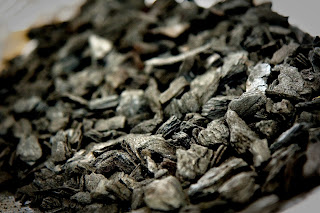
As with all great stories it began with a potato. Longer than I care to admit, there was a time when I was a young and foolish teenager.  Left at home on one of the rare occasions my parents went out, I got it into my thick skull to microwave a potato.  Having no idea what to do, the timer was set to a shockingly high 40 minutes. The inevitable result was a dead microwave and a glowing black lump where the potato had once been.  It was one of those painful experiences in life that one tries to forget but years later it opened up a line of thought.  We need to get the amount of greenhouse gases in the atmosphere down, and fast.  Could microwaving plant material help?   Using patented technology, I’ve been working with a team to set up a new company called Carbonscape which is doing just that. Refining carbon the natural way As many readers will know, technology now exists to capture carbon dioxide (CO 2 ) direct from any major source that emits th...

Sandbag: Stemming the tide of rising greenhouse gases

Image
I t’s not often you hear good news when it comes to climate change. More often than not, reports in the media verge on the catastrophic, rarely giving little hope to the public.  As a result, it can be hard to convince people to take positive action when all the headlines scream doom and gloom. Recently, however, I learnt of a fantastic new initiative in the UK that allows people to make a real difference. Here I chat to Bryony Worthington at www.sandbag.org.uk about a new campaign to be launched in the Autumn that promises to deliver real action on climate change.  This could be a model for the rest of the world. An alternative way forward  Chris: So what is Sandbag? Bryony: It’s a web-based campaign to try to educate people about carbon emissions trading and also empower people so they can get involved and make a difference so we can tighten up the rules. Basically the aim is to try to reduce the amount of emissions going into the atmosphere by enabling ...

Can we seize the day?

Image
To shamelessly pinch a Mikado song title from Gilbert and Sullivan, there’s a bit of a how-de-do going on in Britain at the moment.  The UK Government has been saying for some time that the nation must significantly reduce its carbon footprint. In 2003, it pledged to reduce the country’s 2050 emissions of carbon dioxide by 60% and has hinted this target might be increased further. As part of the country’s long-term aim to achieve major reductions, the Government recently announced that it would increase the tax on fuel by 2 pence a litre (the first since 1999) and raise the excise duty on high-emission vehicles by £200. From these new initiatives on fuel and vehicles, the UK Government is estimated to raise somewhere on the order of £2 billion. Wouldn’t it be great if this was actually used to make a greener Britain? Unfortunately, with oil hitting $135 a barrel and the fear that production has peaked, the country is feeling the high costs of UK living on the back of a credit cru...